Design & Recognition
The Medlock Ames Historic Healdsburg Tasting Room is a thoughtfully reimagined landmark in the heart of Alexander Valley, transforming a former 1920s general store and gas station into one of Sonoma County’s most celebrated wine hospitality destinations. The project was envisioned as a seamless blend of heritage architecture, contemporary design, and environmental stewardship - honoring the site’s agricultural roots while creating a distinctly modern wine country experience.
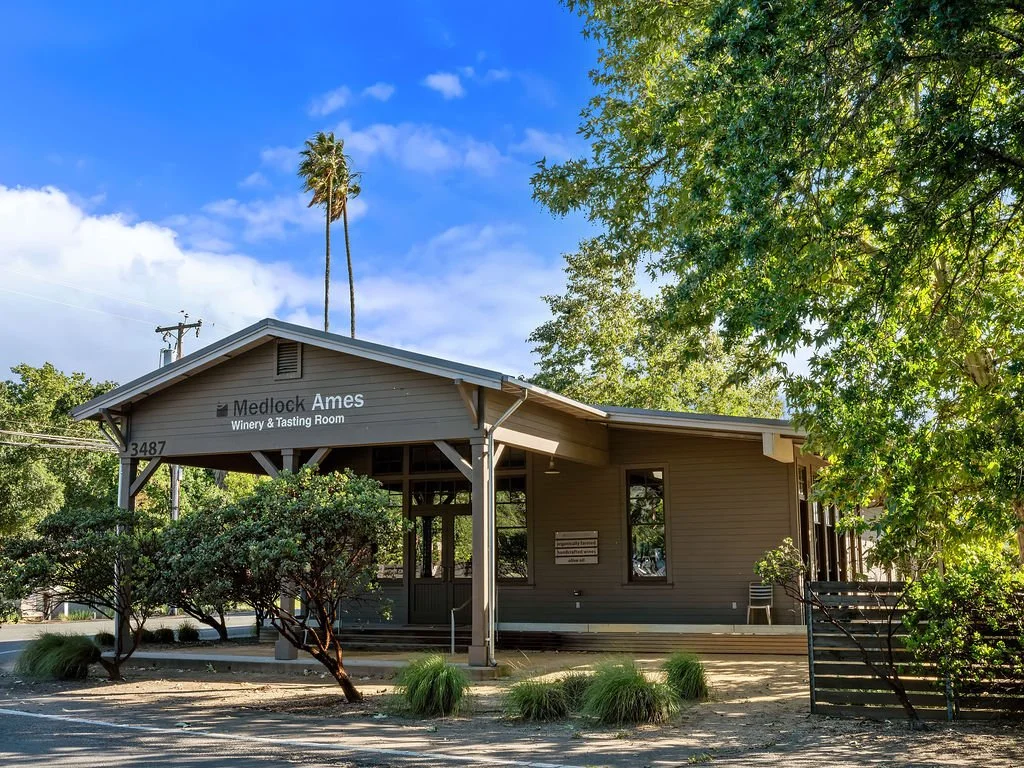
The landscape architecture was designed by Nelson Byrd Woltz Landscape Architects, internationally recognized for their environmentally driven and site-specific work. Their design for Medlock Ames integrates organic gardens, olive groves, bioswales, rain gardens, and permeable pathways into a cohesive landscape experience that reflects the winery’s commitment to sustainability and regenerative farming practices. Salvaged materials, native plantings, and hydrologically focused design elements were intentionally incorporated throughout the property to create a strong connection between the tasting room, the surrounding gardens, and the Alexander Valley landscape beyond.
Interior design was led by Will Wick of Wick Design Group, with architectural and interior architectural collaboration by Wade Design Architects. Together, the team created a layered “rustic modern” aesthetic that preserves the character of the original structure while introducing refined contemporary elements. The tasting room features two distinct hospitality experiences: a bright, communal main tasting room inspired by a modern farmhouse and schoolhouse aesthetic, alongside a more intimate speakeasy-style lounge with rich textures, dark woods, and vintage-inspired detailing.
The project received national recognition for its innovative integration of landscape, architecture, and sustainability. In 2013, the Medlock Ames Tasting Room and Alexander Valley Bar earned an Honor Award from the American Society of Landscape Architects (ASLA), one of the profession’s highest distinctions. The ASLA jury described the project as “amazingly detailed, both quiet and painterly,” praising its authentic materiality and environmentally responsive design approach.
The tasting room has also been widely featured in leading architecture and design publications including Dwell, Food & Wine, and Remodelista for its distinctive interpretation of modern wine country hospitality design.